
Generating Friends
How the years between can bring us together
When I lost my grandfather, I lost my first inter-generational friend, but the lessons I learned have stayed with me all my life. Ben Levine came to live with us in 1973, after my grandmother died. I remember how I loved the smell of his Skin Bracer aftershave, his thick Brooklyn accent converted my dad’s name from Bert to “Boit.” We grew very close, sharing a love of athletics and a good story.
Spending afternoons together, I loved hearing his stories about growing up in Brooklyn, getting into scrapes with kids in the neighborhood. He stood at just over five feet tall. I had the sense he relied on his kid brother “Big Al” for protection from street toughs looking for trouble. His first job as an office boy, aged 13, working in the New York office of the Metropolitan Amateur Athletic Union. He would one day become the assistant manager of the U.S. Olympic Boxing team and founder of the Golden Gloves.
With only an eighth-grade education, my grandpa managed to navigate to the very top of amateur athletics, at one time arranging fights for the likes of Sugar Ray Robinson and Floyd Patterson. He shared stories with me about the 1924 Paris Olympics, crossing the Atlantic aboard the ship carrying the Olympic team, detailing their training and meals along the way. I was amazed by his description of events of fifty years ago, recalled as if they happened yesterday.
I was proud to introduce him to my friends who might join me after school for a quick visit before we took off to the basketball courts or soccer practice. I remember how badly I wanted to take him to the first Rocky movie, where the character of Mickey, Rocky’s legendary manager, struck me as my grandfather’s Hollywood-inspired persona. Age and infirmity worked against my boyhood wish of watching it together.
I was crushed when he died at 89. It was my junior year of high school—an age old enough for me to have formed a deep bond and lasting memories. At his funeral, I learned what it meant to cry a river of tears.
In the wake of our loving relationship and the loss of his companionship, friendships across generations have gone on to shape my life. These unique relationships have distinctive features that give them texture and depth. And they appear continuously in my life, particularly in career mentorships that grew into friendships.
Eric was a senior foreign service officer and leader at USAID. Maybe he saw a young version of himself in me—both were raised in Jewish homes, bearded, Latin Americanists, raising two daughters outside of Washington, D.C. Eric favored three-piece suits, a bureaucrat for all seasons that reflected an all-business attitude. I soon discovered that his outward appearance disguised a deep belief and affection for scores of colleagues he mentored and sponsored, largely out of the spotlight. I was lucky to be one of them.
When smoking was outlawed in the federal workplace, Eric would invite me for walks during his frequent excursions for a quick smoke. “Let’s go for a walk,” he’d say with an outstretched arm, pantomiming his arm over my back and hugging my shoulder. I quickly fell in as we headed for the C Street entrance of the State Department.
Our talks became rapid lessons on how government worked, economic development theory, Latin American history, U.S. politics, and congressional oversight of our often-beleaguered agency. He took an interest in my career, querying me about my potential career in the foreign service. Dinner invitations followed along with the offer of babysitting by his girls to mine. From Eric, I received mentoring and a leadership role model, but also something deeper. I felt seen and valued, beyond the feeling one grants a colleague; it was the embrace of a friend. Tragically, we lost Eric in 1997, as he served as USAID’s mission director in Peru. He collapsed from a heart attack after a morning run. He was 54.
“Go go. Go slow. No go.”
That was the retirement plan advised by my friend David, encouraging me to travel far and wide in early retirement and then level off as one's body at first permits and then demands. This was but one bit of wisdom that I could count on from David as we went from being colleagues to close friends. He knows how to yank me into his stories with a random query:
“Would you happen to know where the saying ‘numb as a hake’ comes from?”
“Are you aware of the Nixon scandal involving the Bureau of Labor Statistics?”
Beyond our common interests, I have come to believe that the intergenerational nature of our discussions give them a real depth. We were born on opposite ends of the baby boomer generation. His early baseball stories are about the stars of the 1950s when he came of age in New England, including a tryout with the Boston Red Sox. Mine were about the last years of the Washington Senators before they moved to Texas to become the Rangers. No tryouts.
From my 30s to my 60s, our friendship has been filled with conversations about work, politics, sports, economics, immigration, health challenges and other topics. We had lots in common—a shared interest in international development, history, politics, civil rights, sports—enough to fill any random afternoon at a baseball or football game. David may be the most well-read person I know. His interests are broad and varied and I imagine his “on-deck” stack of books overflows his nightstand to form stacks of books on his bedroom floor.
David attended the funeral when my dad passed in 2006, where he learned about my dad’s work in government and civil rights. He complimented me for my eulogy, noting, “the apple sure didn’t fall far from the tree.” The observation struck me deeply, honoring my dad, me and our friendship all at once.
From that point on, my conversations with David most closely resembled those I often had with my father. We talked about financial planning, real estate, child rearing and friendship. David never offered advice in the traditional way, but rather thoughtful narration of his life challenges in a way that made me listen closely. His openness and ease with the details of his life put me at ease and allowed me to share my own thoughts and feelings.
I considered Stacy to be my friend long before I considered him a mentor. Tall, rail thin with a deep and melodic voice, he immediately calls to mind comedian Steve Martin, without the banjo. We first met when I was charged with squiring him to Capitol Hill when he served as USAID’s director of Central American Affairs. His job was to brief interested Members of Congress and committee staff, putting our best foot forward in describing development assistance programs under his purview. My job was to let Stacy know in advance what questions they were likely to ask and to detect any landmines he might detonate.
Stacy left D.C. for a series of high-profile assignments, heading USAID missions in Guatemala and South Africa. When he returned to Washington for consultations, I made sure to reserve time for a trip to Camden Yards for an Orioles game. When I once offered to buy us ice cream, he stepped right up and ordered a chocolate fudge sundae in a batting helmet. I felt like I was just introduced to his inner child—he was the same 10-year old as me, just born at different times. This is where our friendship blossomed, during long conversations during which an incidental baseball game was played.
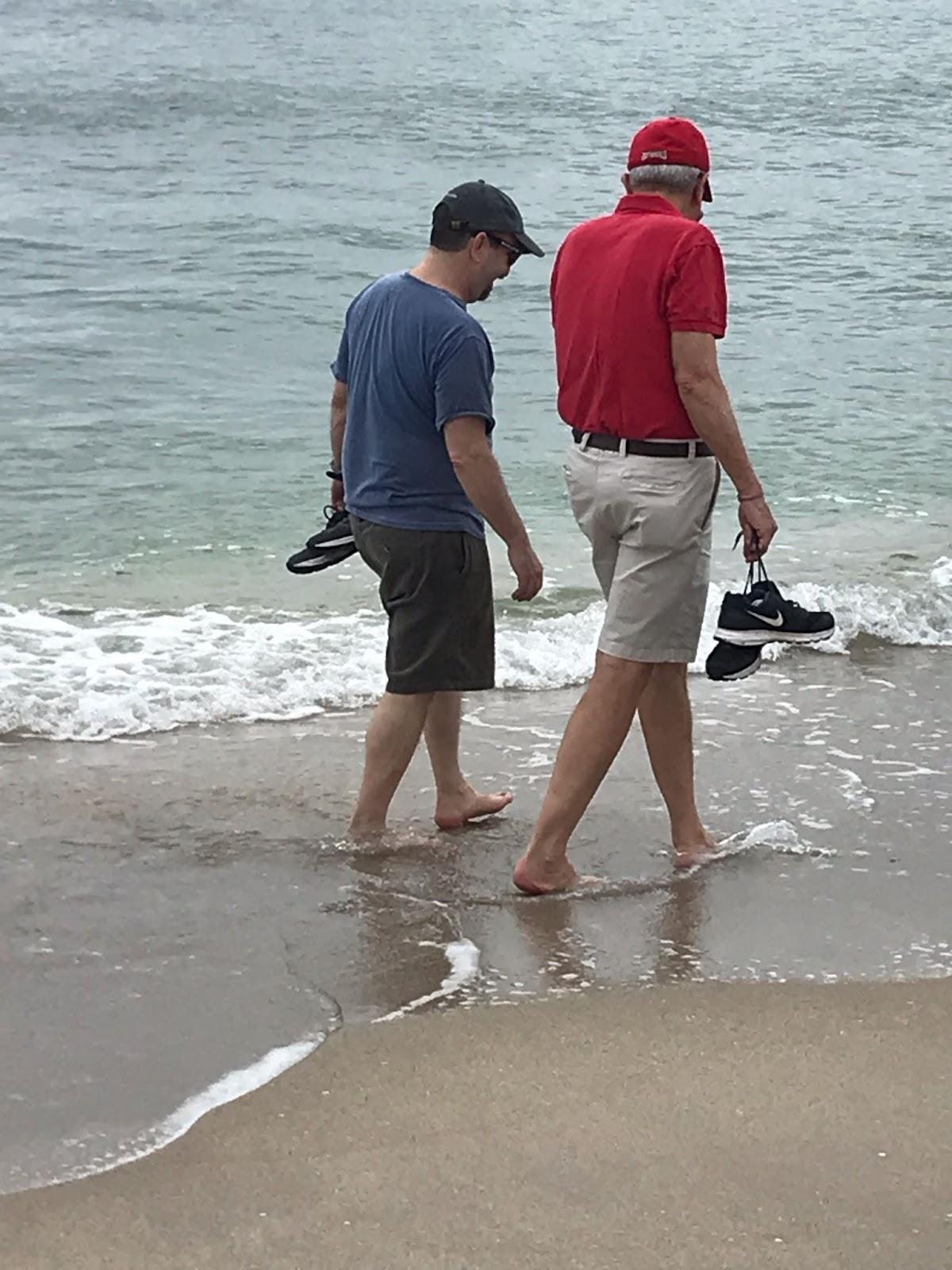
Like many early baby boomers, he was inspired by JFK’s call to service and began his career in the Peace Corps. While I didn’t choose that path, I was fascinated in how that experience paved the way for so many of my colleagues in international development. I also had the honor to see Stacy in action as a manager and leader. I know we explored these topics together many times: in cab rides to and from Capitol Hill, on visits to the field, and in conversations between innings at many a ballgame. Perhaps the greatest contribution of Stacy’s leadership is that he produced other leaders. Recalling a staff meeting of his senior staff in Guatemala, we noted how each and every office director went on to lead at least one and in many cases, several USAID missions in their respective careers.
A shared love of sports, history, politics and public service, along with a deep and abiding personal respect, runs through these friendships. This is the landscape where inter-generational friendships bring out a distinct richness. Sharing contemporaneous memories from childhood and beyond about historic moments, people, and places, living through conversation the things I was not able to experience, or if so, only years later.
What was it like to be part of the civil rights movement? What was your draft number? Have you ever met a head of state? What is your career highlight or accomplishment of which you are the proudest? How did you meet your spouse? What family traditions do you have and how did they start? How often do you talk to your kids and what do you talk to them about? Have you ever been to the Super Bowl? A World Series Game?
These friendships give me insights into what lies ahead. Conversations now turn to travel, reading and other leisure time activities, the exploits and struggles of adult children (and grandchildren) in ways that are different from my conversations with peers. The depth is nurtured by an intentional, but entirely comfortable, practice of spending quality time together, a luxury I don’t take for granted. Being together for hours (and now with all of us retired, sometimes days) allow the stories to flow in both directions in a way that has brought us closer over the years. I carry the deepest gratitude for these friends a bit further down the road in their journey. They connect me to Ben Levine, the first of my wise men.
I’d like to think that I have come to be the “senior friend” to a member of the next generation. But that’s a story for another day.
I’d love to hear about your friendships across generations and how they are special to you. Do you have a meaningful inter-generational friendship that’s shaped your life?
Beautiful tributes to these important men in your life. You follow their lead in the care and attention you give to your friendships and work relationships. Grateful to know you and them (through you).
Thank you, Neil, for sharing these stories. I can only think how fortunate I am to have known those you profiled and you.