
Sentries
Looking Out for Friendship
In my inaugural post, I discussed how I wanted Shorter, my Substack newsletter, to be an incubator for the book I hope to write on friendship, connection, and community. I want to thank everyone who has subscribed, from those who have followed my blog “Dispatches from the X Bureau” and joined Shorter as regular readers, to those more recently recommended by Paul Leighton and his splendid local newsletter-of-record for Beverly, MA, the Beverly Beat. I appreciate your comments, especially the requests for more stories. Thank you for coming on this journey with me.
I also want to thank my “sentries” — those readers who are on the lookout for articles, podcasts and stories about friendship. It is not uncommon for me to get multiple referrals of a “must-read” piece or podcast on the object of my attention.

One example: a New York Times article forwarded to me by multiple sentries. This opinion piece by Janice McCabe, an associate professor of sociology at Dartmouth College, introduced me to the concept of “friendship markets.” She writes:
In a thriving friendship market, a majority of people in a particular setting are interested in “buying” or “selling” friendship. For example, middle schoolers merging into a new high school, or first-year students arriving at college. New connections abound.
But we spend much of our lives in weaker friendship markets, where people are open to conversation, but not connection… Even intentionally putting yourself out there doesn’t inspire reciprocation if a friendship market has closed: Others already have fully formed friend groups.
I hadn’t heard the term “friendship market” before, and the systems analyst in me tuned in. One may try to “put themselves out there,” but if you are operating in a weak friendship market, it will take more effort and maybe more research into where those potential friends with shared interests are likely to show up.
Pulling that thread, the term seems to have been popularized by Shasta Nelson, the author of a number of books on friendship, including Frientimacy. In her TEDx talk, she argues that the cure for loneliness is not acquiring more friends. It’s getting more from the friendships we have. Her formula P+C+V, or Positivity + Consistency + Vulnerability, is the secret to any healthy relationship.
Positivity is the idea that we want to be around positive energy, which Nelson explains, “... comes from smiles and laughter and kindness; acts of service and empathy and validation, gratitude and affirmation; and all those things that leave us feeling accepted.”
Consistency is showing up in a way that can be counted upon, having someone’s back in a way that builds trust. The examples Nelson names include “hours logged, history built, rituals … and how we get to know each other,” though the ways we accumulate these intimacies are as varied as each of our relationships. That consistency comes to us early in life through repetition and learning in that K-12 period that seems to go on forever. It’s also when we’re likely to find our first deep friendships (see Hey Mikey) and if you are lucky, begin lifelong friendships.
Vulnerability is the ability to share more of yourself with someone else, including your hopes, dreams, fears, setbacks, and celebrations. The more we let our genuine selves be seen, the stronger the relationship becomes, anchored in positivity and built through consistent history of care and support. Together, these three qualities build a resilient and emotionally resonant relationship that can grow with all parties involved.
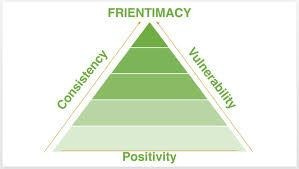
I have always thought that the explanatory power of formulas like P+C+V comes from elegance and simplicity, which yield that power. This one spoke to me deeply.
Friendship markets aren’t the only framework I use to think about relationships. Rachael, a good friend and former USAID colleague, now my sentry in Australia, introduced me to the term “formative communities,” which comes out of the work of Bill Burnett and Dave Evans, authors of Designing Your Life. A formative community is in essence a community that intentionally shapes the personal growth of those within it.
For Burnett and Evans, “…[a] formative community is grounded in shared intent, a collective commitment to becoming more fully human. The purpose isn’t performance, productivity, or pleasure. It’s growth. It’s meaning. It’s helping one another live more consciously and authentically.” Their overall approach takes design concepts and applies them to career management and satisfying life goals.
These are not “collaborative communities” that may form to achieve a clear material outcome such as a volunteer fundraiser, a clothing drive, etc. Nor are they a “social community” like a bowling team, book club, or a rotating dinner club. Each of these may be worthwhile for the enjoyment and companionship it brings, and may or may not leave us feeling seen, accepted, or changed in some way. A formative community is something else. A formative community is created deliberately with an intention to live more authentically and grow as a person.
The closest thing I have experienced to a formative community grew out of a nine-month coaching course I completed last year. To complement the in-person sessions, each participant was assigned to a coaching circle to continue to work virtually. At the end of the course, we just decided to keep meeting. With the shared experience of the course as our base, our group met regularly: six professionals, two men, four women, both in and outside of the coaching world. We continue to meet each month to continue embodied practice (breathwork, meditation, movement) and discussion of our lives: our ongoing paths, challenges, hopes, plans, and commitments to personal growth.
Our friendships formed and deepened quickly. And not surprisingly, we do quite well in what Shasta Nelson calls “working the top of the triangle,” where the attributes of positivity, consistency, and vulnerability come together and reinforce each other with every encounter. This group has my back and I have theirs. Together, we inspire and help each other grow.
This kind of group emotional intimacy may not be everyone’s cup of tea. The authors call formative communities rare. Burnett and Evans also are intent on reminding readers that, “[a] formative community doesn’t promise quick wins or tidy outcomes… What it offers instead is something more enduring: a place to grow, to be seen, and to become more fully yourself, over time, with others.”
I expect to be deeply indebted to my sentries. Their messages range from “keep writing” or “thinking of you” messages to poignant observations or a personal story that Shorter brought to mind. There is no roll call or weekly meeting. Most of them don’t even know they’re part of a vast network of friendship, holding me up and supporting my journey to explore friendship, connection and community.
I thank them all. Now, get back to your posts.
I'll add a suggestion to read my friend Kristi Nelson's book, Wake Up Grateful: The Transformative Practice of Taking Nothing for Granted. I led a 15-month book-study group on this book a little while back (and would love to start another one or just repeat the study again with the same group), and she leads a 3-day workshop at Kripalu every fall (Nov/Dec). It's not a quick read, but it is transformative.
Thanks, Neil, as always for an illuminating post!
I too, love this piece. Even within a short “Substack essay” you share such depth and insight into the meaning of friendships. It makes sense to me that you have a deeper more intimate friendship with your coaching associates as that work requires a deep interest & curiosity into asking more personal and pertinent questions, allows for that vulnerability that so many seem to shy away from. Those friendships are rare.