
The Perfect Gift
Keeping Your Close Friends Closer
In a recent NYT Magazine (Where Have All My Deep Friendships Gone? writer Sam Graham-Felsen lamented the loss of male friendships and the reasons behind it. He quoted studies from the Survey Center on American Life and Gallup noting the precipitous drop – from 55% in 1990 to 26% in 2024 -- in the number of men reported having six or more close friends.
Graham-Felsen explores his own experience with his friends who report the lack of energy to navigate “the many unspoken, byzantine bylaws to male friendship,” from not wanting to appear weak or needy to the fear of emotional honesty. He describes a typical male “hang” usually involving watching sports along with discussions of politics, books, podcasts, food and fitness Conversation rarely approaching the emotional terrain of, “How are you doing…really?”
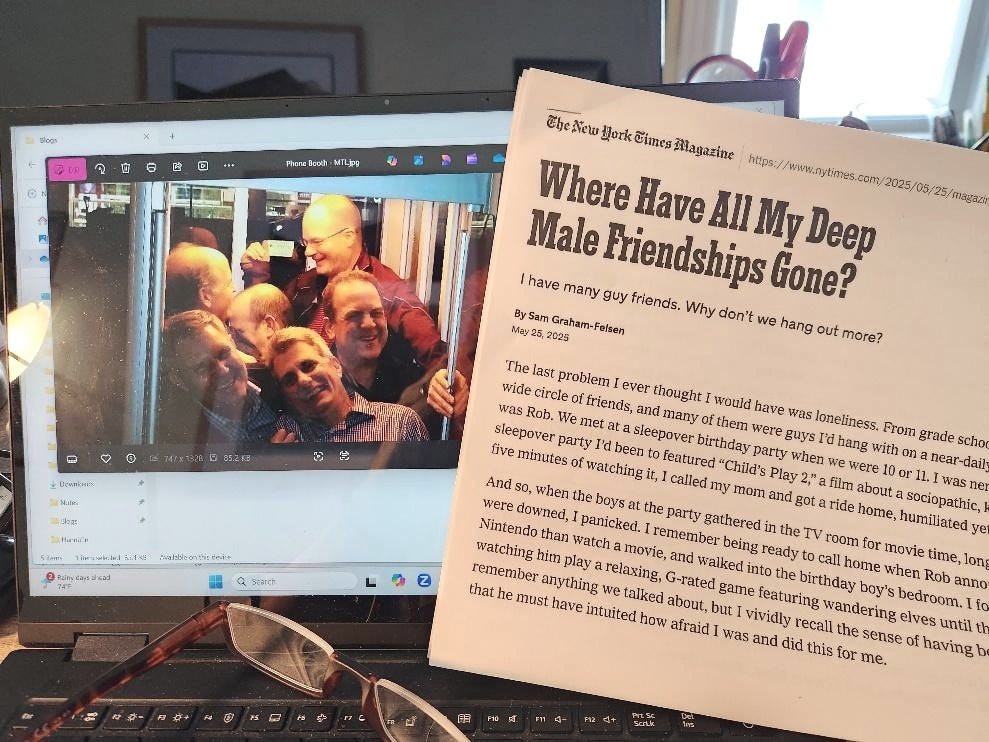
Two friends of mine – one from junior high and one from college – sent the article to me, with one saying, “This has your name on it.”
Good to know my brand is strong.
Speaking as one of the 26% of respondents with more than six close male friends, I was particularly interested in hearing about men dealing with a lack of friendships. Graham-Felson landed on a piece of advice from the podcast, Man of the Year, a simple practice labelled “TCS” – which stands for “text weekly, call monthly, see quarterly.”
Using that filter, I found that it fit nicely with my friendship pattern with two long-time male friends, who live nearby in the same state, but too far away for spontaneous pop-ins. But our TCS pattern goes deeper as do our practices of nearly lifelong friendship.
So much of the NYT piece hit home, especially the drift that occurs when friends start getting married and having families. With the emotional support of a committed partner and a family to raise, little time and energy may be left for investing in friendships of any kind. Not the case with my group of close, male high school friends. Rather than drift, we doubled down.
Starting in the 1990s, with all seven of us married, we started annual get-togethers, picking a city with a baseball team and other attractions for a long spring weekend. My wife soon embraced the tradition, especially when our guys’ weekend fell on Mothers’ Day, leaving her a free weekend to herself. In her words, the perfect gift.
We called ourselves “The Dockers,” for the 1990s Dockers ads, featuring a group of guys having inane conversations about our best fast-food experience, middle school crushes or reliving (very few) sports exploits. These weekends were long enough to get through the usual favorite stories, male one-upmanship and insults. But we also made time to get to conversations with emotional weight and impact.
The long weekends allowed time to spend time in twos or threes, taking in a museum or a walking tour while we discussed raising kids, new hobbies or highlights from the year just passed. Of late, we build in time for naps. Beyond the centerpiece sports event, we reserve one night for a special dinner, where over time, we could make space for our discussions to get more serious.
At one point in our long-standing friendship Drew, a Docker and a forensic psychologist from Denver, was a victim of an armed robbery at a convenience store. The trauma caused by having a gun aimed at his head led him to secure a carry permit and take part in intense hostage crisis simulations as he processed the incident. In one group weekend conversation that moved from friendly ribbing to a quasi-intervention, I asked Drew whether carrying a gun made him feel safer (yes) and whether he had talked to his family and work colleagues about regularly carrying a gun (no). We all learned from Drew how that trauma had profoundly changed his sense of security. Drew later allowed that the conversation gave him pause and helped him moderate his carry habits. It was the kind of “no bullshit allowed” conversation that close friends can have, knowing that the questions come from a place of love.
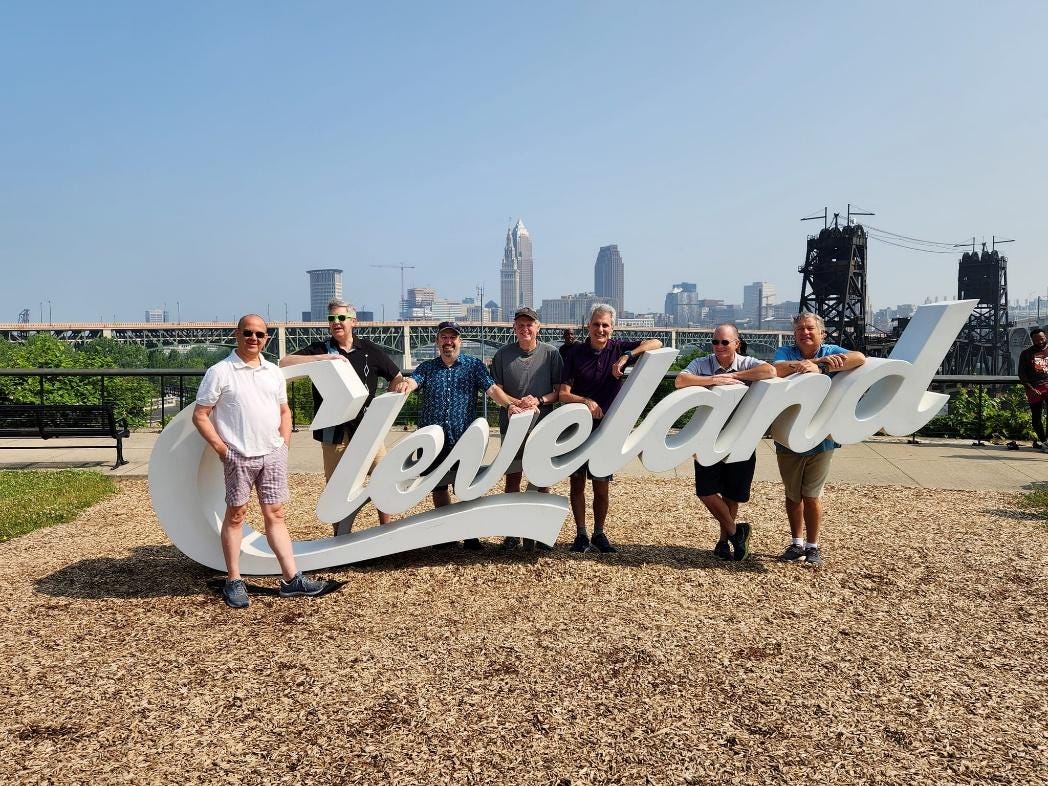
We still have the baseball game “hang” and the late-night game of Hearts, allowing us the time we need to open up a bit more and show up as our best selves for the friends we love. Our shared history and ongoing commitment has given us the knowledge that showing vulnerability can strengthen our bonds. We have coached each other through parenting challenges and celebrations, managed eldercare from close by and far away. We have shared career comebacks and triumphs; and helped each other navigate episodes involving violent crime, cancer, heart attacks and death. In short, we have grown up together, long after our initial young adulthood united us.
People tell me how unique my Docker experience is, and how lucky I am. I asked myself what accounts for that experience. It led me to the Atlantic’s Friendship Files, where Julie Beck wrote about “The Six Forces that Fuel Friendship.” I think her explanation of “attention” and “intention” along with “ritual” come closest to the explanation of how the Dockers are now coming up on their 30th weekend together.
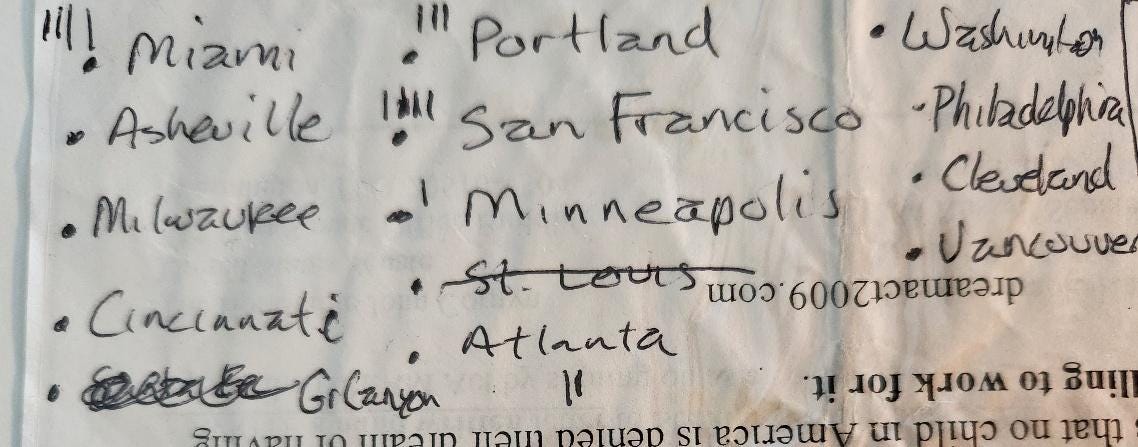
“Attention” comes in the form of TCS, with frequent text strings with updates, observations and most recently, Monty Python clips. The intention is most noticeable in February when we start planning for our annual trip – the destination previously chosen at a highly ritualized (some say tortuous) balloting process played out over hours of the preceding year’s Saturday dinner.
And oh, the stories. We joke that the one line never heard on a Dockers’ Weekend is “Stop me if you’ve heard this one.”
But the stories remind us that we aren’t just high school friends still hanging out. Not just providing an excuse to revert to our 14-year-old selves. Over four decades, we are still renewing our friendships, building these relationships that sustain and support us every day.

Filling My Cup…with ice cream
As part of my ongoing adjustment to life in New England after half a century in the DMV (D.C., Maryland and Virginia), I have discovered the hands-down best thing about this frosty, Dunks-imbibing, sports-crazed, leaf peeping, snow-plowing, liberal thinking, chunk of the country. They know what’s what when it comes to ice cream.
The small, independently-owned, homemade ice cream stand is foreign to my experience. Yes, Maryland had ice cream, but mostly it came from the grocery store and rare trips to Baskin and Robbin’s. The only comparable institution, Gifford’s, had a single store but the trip was miles away and involved a highway. Incidentally, Gifford’s is a Maine-based chain found all over New England. Now, I have even more rarefied tastes.
In my North Shore town alone, there are three places to choose from for a maneuver on a hot summer night. While exercising and trying to lose weight, I fight the lure of dozens of flavors, availability of hand-dipped and soft-serve varieties, filling my choice of sugar, waffle or cake cones. Like any good meal, the wait and preparation time is always 3-4 times longer than the time it takes to devour that perfect combination of cool, creamy, sugary goodness.
At last, summer begins. Make sure to try the Sea Salt Caramel.

From the Bookshelf
I am excited about Peter Block’s Community: The Structure of Belonging for its insights into our penchant for top-down problem-solving, the “stuckness” of our communities relying on community meetings generating ideas, distilled by expert consultants, resulting in recommendations and action plans while nothing actually changes.
Eschewing problem analysis based on deficits, Block suggests we find a new way to consider context, relatedness and language as the building blocks for meaningful collective action. He shares examples of how individuals, communities and organizations have applied these techniques with success.
At a time when our federal institutions have been hijacked, resulting in failed or faltering governance, Block offers a new approach to solving our problems from the ground up. With Block in mind, I am percolating local and virtual conversations that put belonging at the center. More later.
***
Just Finished: Green by Sam Graham-Felsen
Reading Now: The Other Significant Others by Shaina Cohen
Book Clubs: Three Kings by Todd Balf and Prequel by Rachel Maddow
Neil - love this in so many ways! Thanks for sharing about the Dockers, I remember you talking about the tradition and group, and it’s fascinating to hear more about the backstory and process! And - let’s talk about Block! Is Community worth a read in your opinion - as someone who’s interested in facilitating community building and collective civic action?
Cheers to the Dockers! And to summer time ice cream!