
Your Move
Friendship across boundary lines we draw with our differences.
I was recently interviewed by Margot, a friend who has embarked on an effort to gather 1000 interviews on the topic of friendship. I was immediately interested in the project, parallel as it was to my own exploration of the topic, I volunteered to be interviewed and to invite others to participate.
As we spoke, Margot asked, “Have you made friendships across political and other differences?” This question seemed so timely as we are constantly told how polarized our society has become, how we choose “the flavor” of news and information we consume, and how more of us choose to live in communities where we share the same political views. New research tells us that we are less polarized by competing policy choices, but rather by differing feelings about identity and which party’s ideas make us feel comfortable. That’s why sharpening your talking points and making better arguments seem to have such little impact in changing someone else’s mind. We need to find a new way to talk to each other.
Margot’s questions stirred a memory of friendship I experienced when I was a student at the National War College, one of our country’s “military schoolhouses” which each year graduates hundreds of senior military and civilian leaders from across our government and from allied militaries as well. As a senior leader from the now defunct U.S. Agency for International Development, my classmates viewed me as a fairly exotic bird among the nearly 250 leaders from across our government. I am also probably the only person holding degrees from a Quaker College and the country’s premiere military university.
Sitting in the Arnold Auditorium for our class convocation in a large, three-tiered, red velvet theater, I had a rush of feelings as the military honor guard gave way to the then-Chairman of the Joint Chiefs of Staff who exhorted us to dig deeply into the experience of this mid-career odyssey. My first reaction was that my mom would have been so proud of me, immediately followed by a rare moment of career doubt, I asked “What the hell am I doing here?”
With a mix of intellectual curiosity, intense study, and good humor, I soon found my way. One good omen during my first week was when our homeroom phone went unanswered several times before someone called out, “Say Vandelay Industries. Say Vandelay Industries.” With several fellow Seinfeld devotees in my midst, my chest swelled with newfound confidence.
Still, there were cultural differences to navigate. Campus was on a military base in downtown D.C. When “Taps” played at the end of day, if you were in your car, you were required to stop, exit the vehicle and stand at attention as the American flag was lowered. There were also unwritten rules one learned. On a visit aboard a Navy ship, I was reminded that the galley sometimes doubled as a surgery, and I was asked to remove my baseball cap as a sign of respect. “Military time” was also different, not just the that 4 p.m. was 1600 hours, but on time meant 10 minutes early, arriving literally “on time” meant you were actually late, and coming in five minutes after class started got you recognized for the wrong reason.
Classroom discussions could be spirited but were rarely ideological. They focused on how to respond to national security challenges and how our powerful nation might best combine and deploy our many resources. I may have been a lone voice in questioning the need for a new aircraft carrier, but political divides were less discussed than the variety of mindsets and cultures particular to the military and civilian services and their constituent parts and how they interacted with civilians in our government and citizens around the world.
It was a fascinating year from which many friendships developed. I discovered that we as a group had far more in common than I expected. I quickly learned that I shared with my classmates a universal commitment and unwavering devotion to public service, a belief in the power of teamwork and an intellectual curiosity to understand how different parts of our government might work better together. I found an intellectual openness marked by the ability to listen and appreciate differing opinions. And I found a generosity of spirit, support and genuine care for others. Classmates would soon become lasting friends.
My roommate for a two-week field study in Vietnam and Thailand would be emblematic of this kind of friendship. Assigned at random, this civilian, Jewish-Quaker democracy promotion expert from the DMV was paired with an Alabama-born, Air Force Lieutenant Colonel. Don was a self-described “good ole boy” and “missile man” which meant he was the guy manning our ICBM missile silos and responsible for protecting us from nuclear attack.
I am guessing our anxiety dreams about work were vastly different.
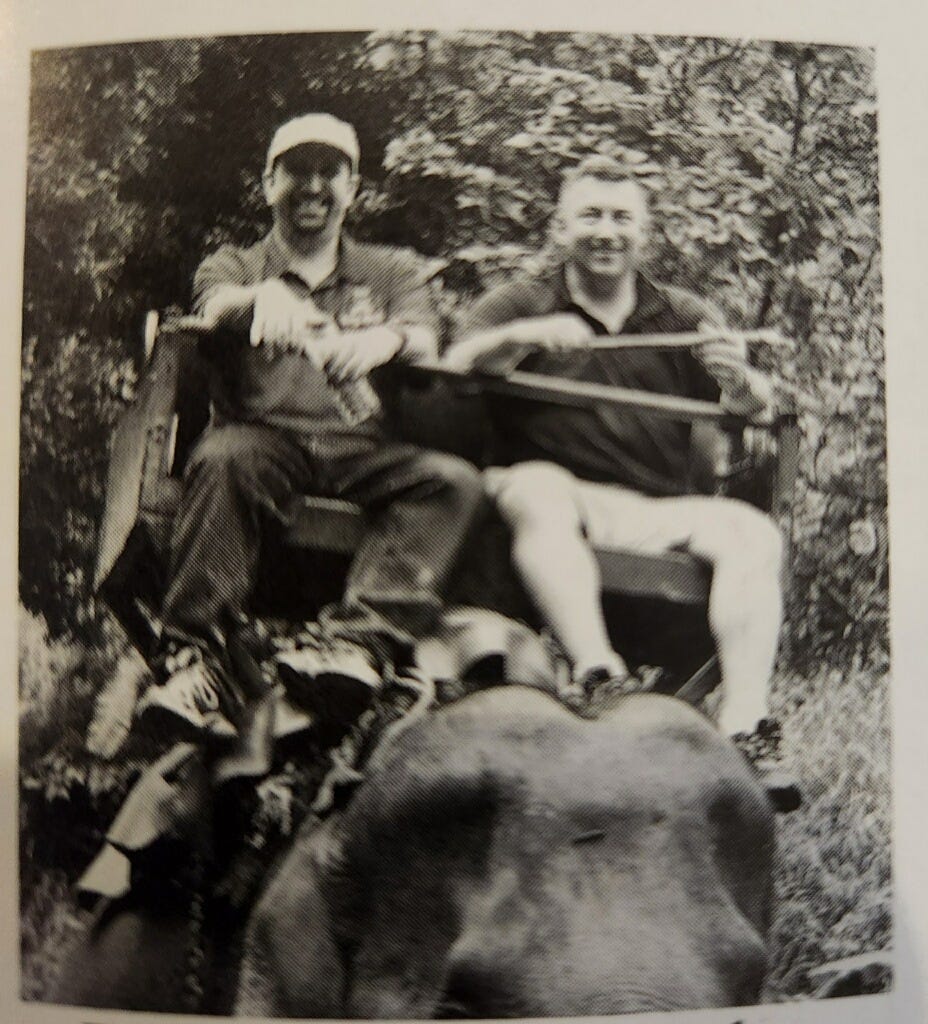
We met during the trip’s organizational meetings just a few weeks before departure. I will never forget an early conversation where Don said, “Look, I just want you to know that I want to make sure I’m not doing anything to annoy you – talking too much or snoring or whatever – just let me know.” With so few words, he put me at ease and opened the way to a fast friendship.
Don took a strong interest in procuring a wristwatch, wondering if he could score a Rolex somewhere. We quickly pointed him to several vendors, telling him they sold something called a Dolex (or Don’s Rolex). In Thailand, I invited him to try the local cuisine, describing the selection of hot sauces: “This one is hot, this one is very, very hot…and this one will shoot blue fire out of your ass.”
Before lights out, we would compare notes on the days’ meetings with local officials and site visits. Don shared the fact that his father had served in Vietnam. This trip was not just for himself, but a way to honor and connect with his dad. We spent time at the “Hanoi Hilton” where American POWs were held and visited the Cu Chi tunnels outside of Ho Chi Minh City that played home base for the Viet Cong. Back in our room, we discussed how being able to visit and reflect on this piece of history made us feel. Regardless of where we came out on that conflict, I respected and supported Don in this journey and what it meant to him and his family.
When we returned to Washington, Don learned he had earned promotion to the rank of full Colonel. As less than 2% of Air Force members reached this rank, this promotion was a big deal. I was both honored and dumbstruck when he asked me to serve as narrator for his promotion ceremony.
While this custom was quite new to me, I had been to several promotion ceremonies that year, and Don’s request touched me deeply. I grabbed the edge of the lectern to stop my hands from shaking and read dutifully from my script as Don reaffirmed his oath to the Constitution and received the eagle pins on each shoulder, surrounded by his family, friends and classmates.
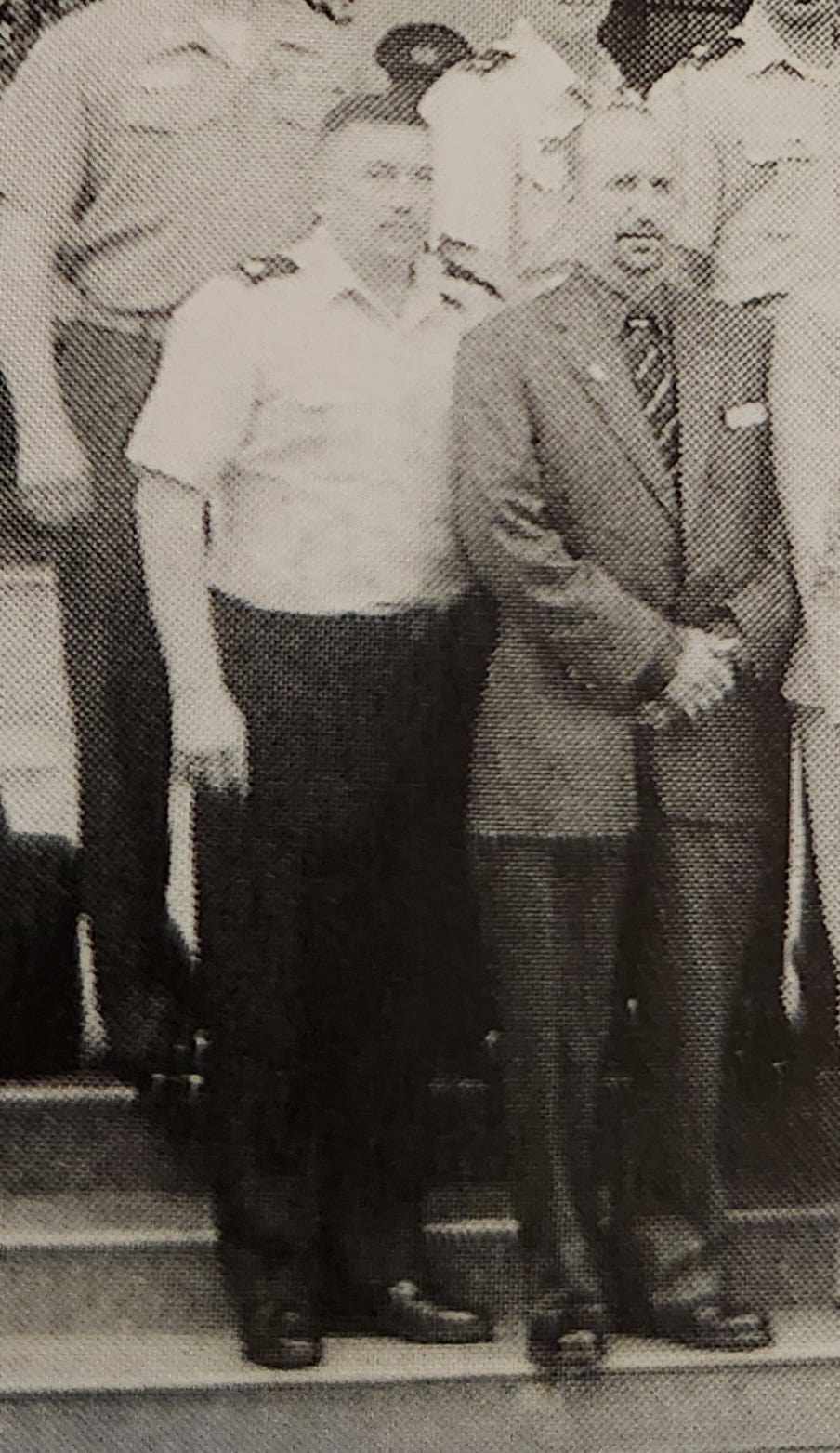
While we went our separate ways after graduation, my enduring connection with Don and connections with so many of my classmates speak to how differences may be overcome. Our differences may seem small as we shared similar traits of race and class, but we certainly identified differently culturally and by experience. We found ways to connect through curiosity, humor and care.
Don made the first move and set us on a course of friendship that I treasure. In doing so, our friendship went to the next level and blossomed from there. It makes me think what move I might make to cross the divides we face. How about you?
Do you have a friendship across a dividing line that you treasure? Or a connection that made a bridge you didn’t expect? I’d love to hear your stories in the comments.
Brings back so many great memories! Thank you, Neil!
I’m so happy that our conversation prompted this reflection! :)